BYD ATTO3
Review
BYD
BYD is one of the world's biggest battery makers. It builds electric trains, buses, grid storage units, cars, and batteries for all the above as well as for electronic gadgets. BYD has 600,000 employees of which a slightly staggering 50,000 are engineers. The Atto 3 is the first car on BYD's newest electric platform, which has the potential to take FWD, RWD and AWD, 400V or 800V, and come in various sizes for low-slung cars or SUVs. BYD is across it all: the battery, motor, electronics, chips and software are all homebrewed. And very advanced. The Atto 3 seems relatively unambitious as a first step: FWD, 400V, a 60kWh battery. But that's the kind of car selling like crazy in Europe, and so the Atto 3 is targeted to build up a relatively big presence in a short time.
the looks
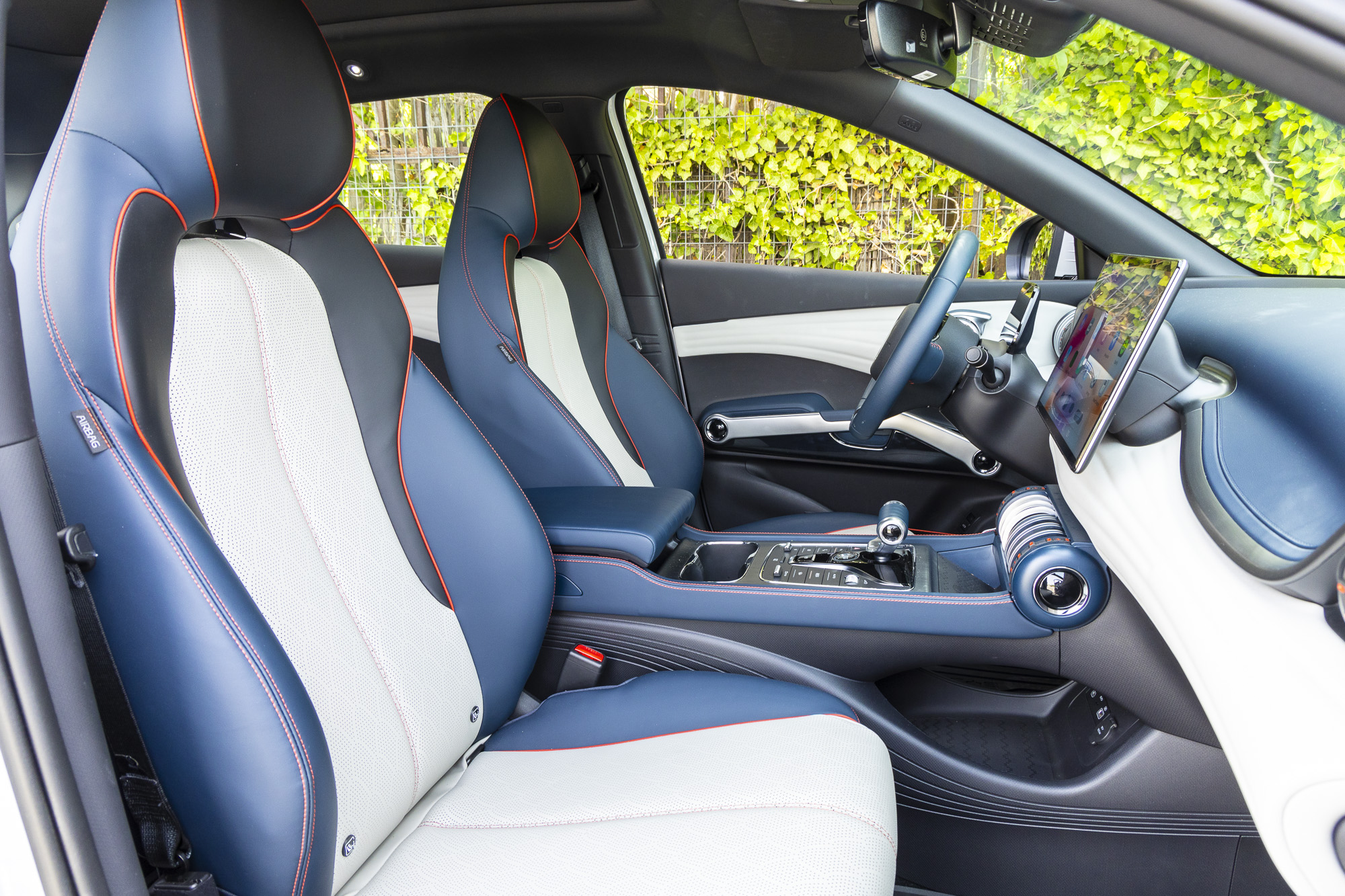
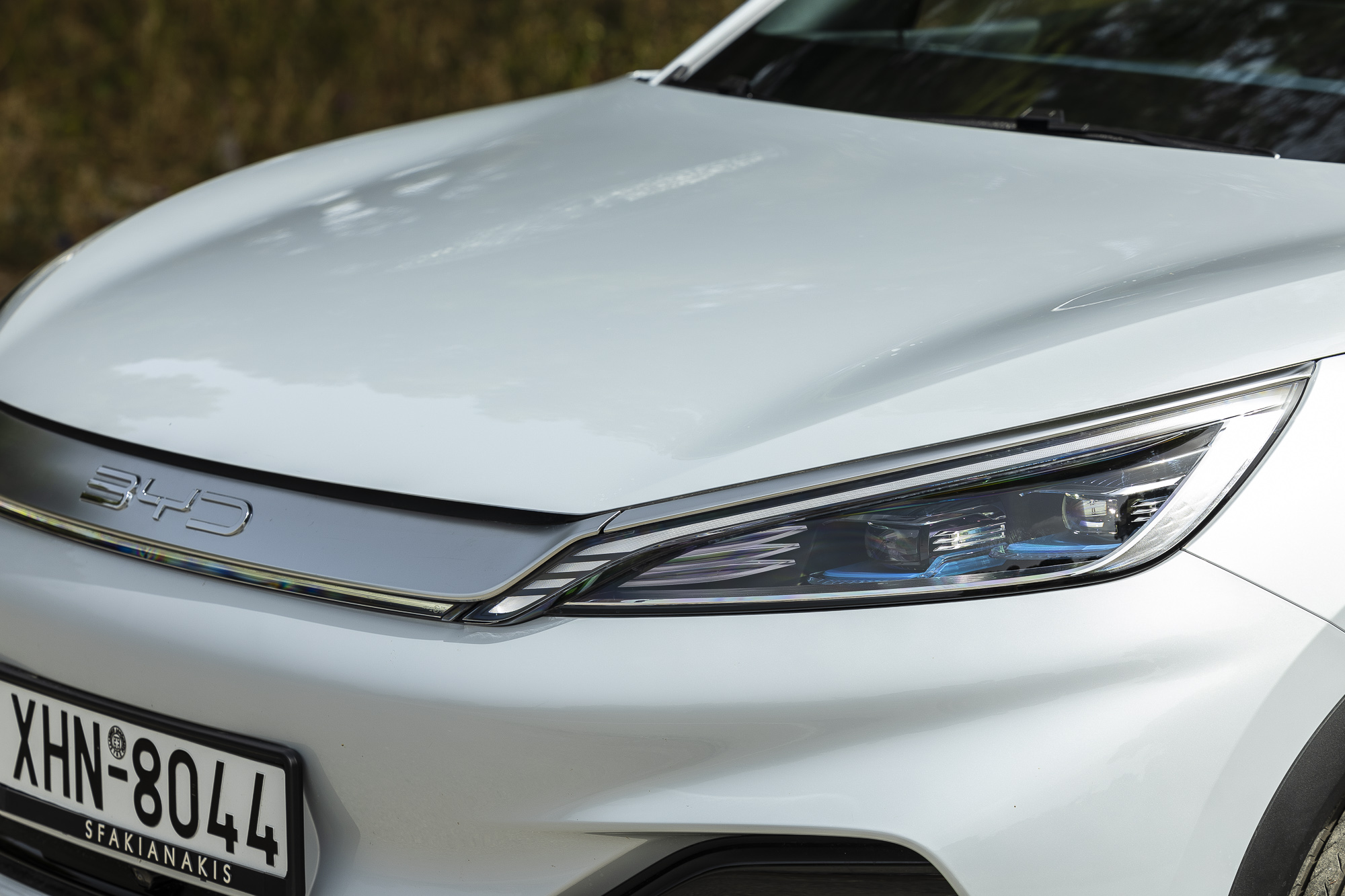
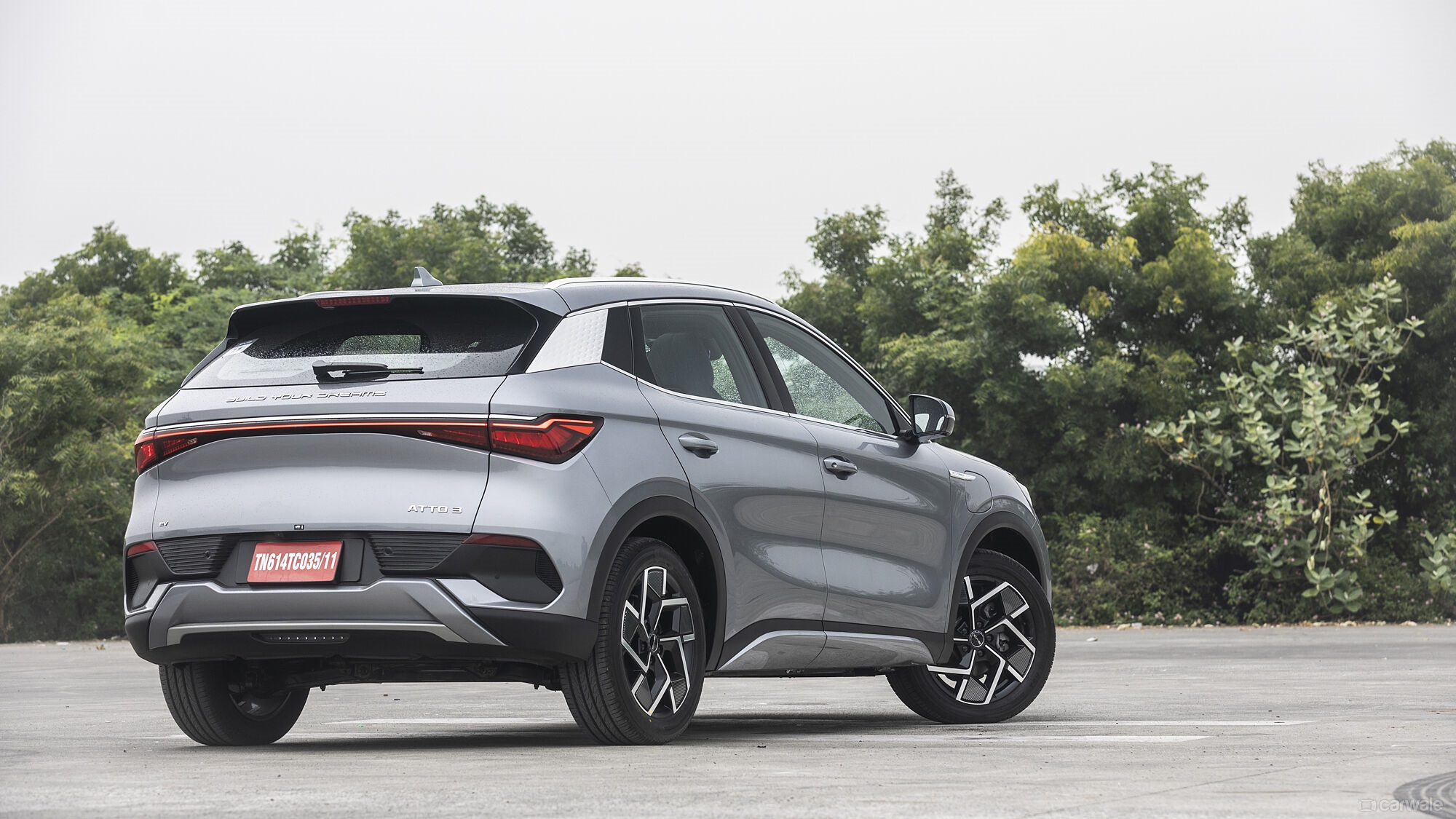
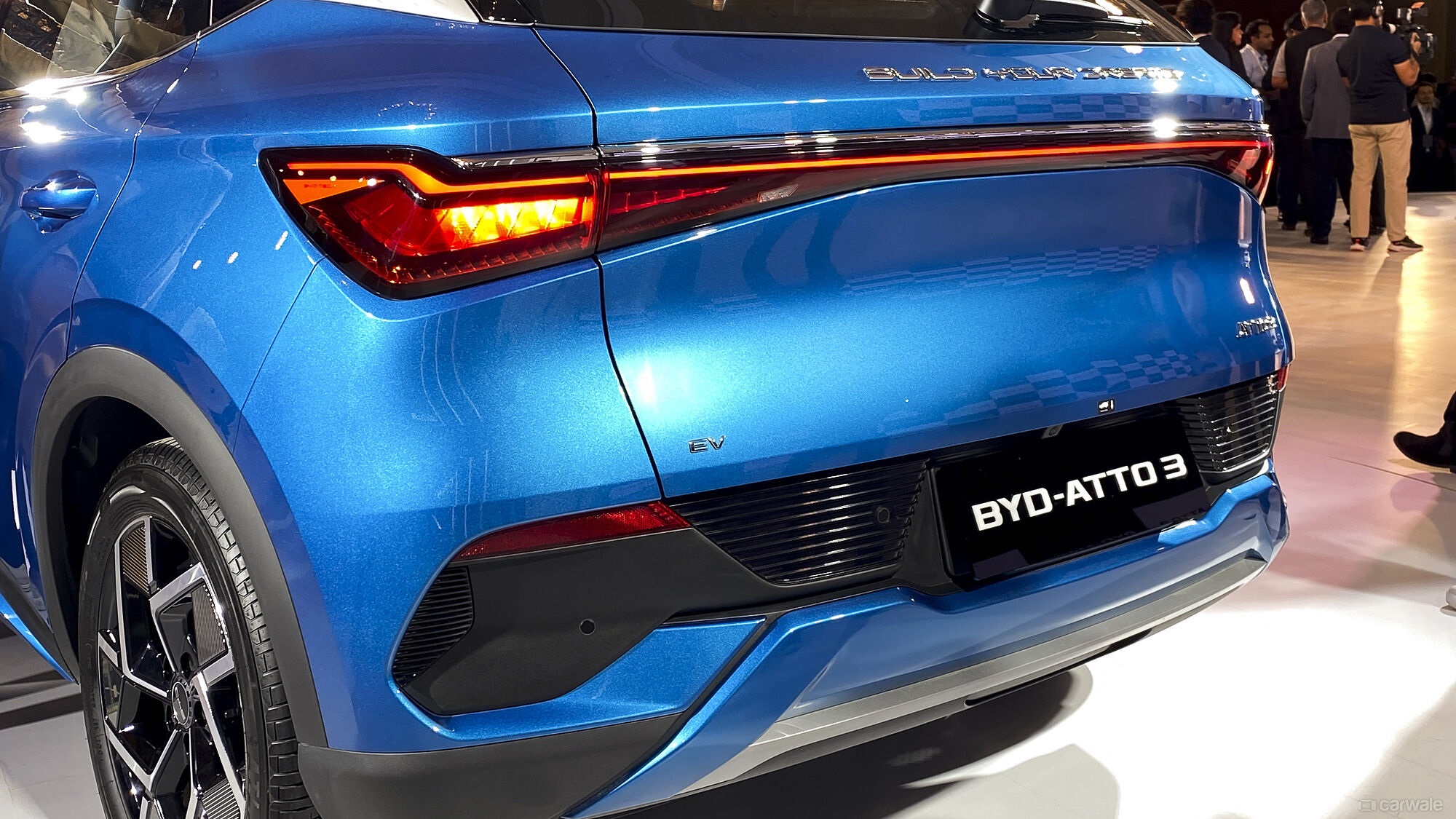
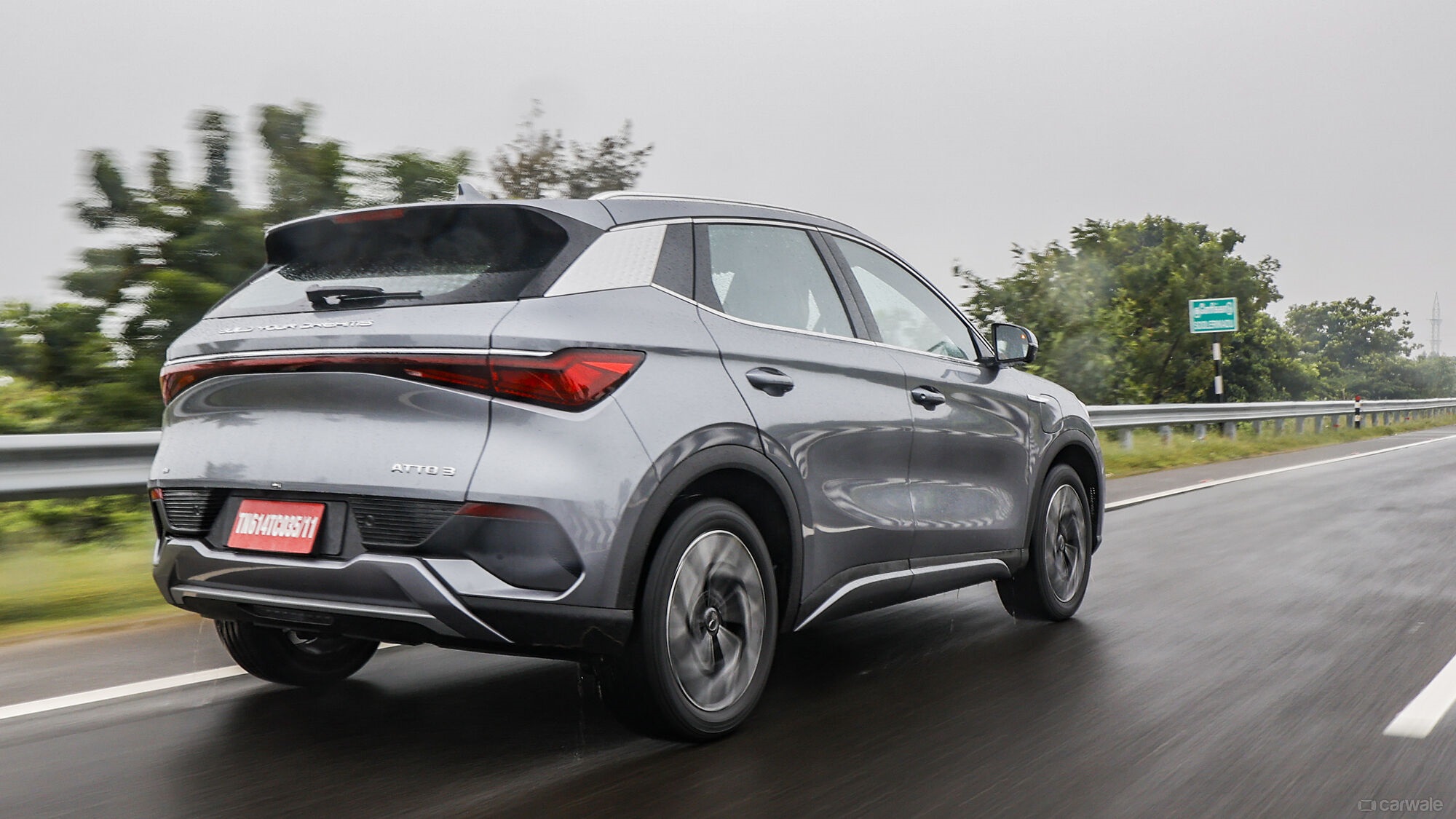
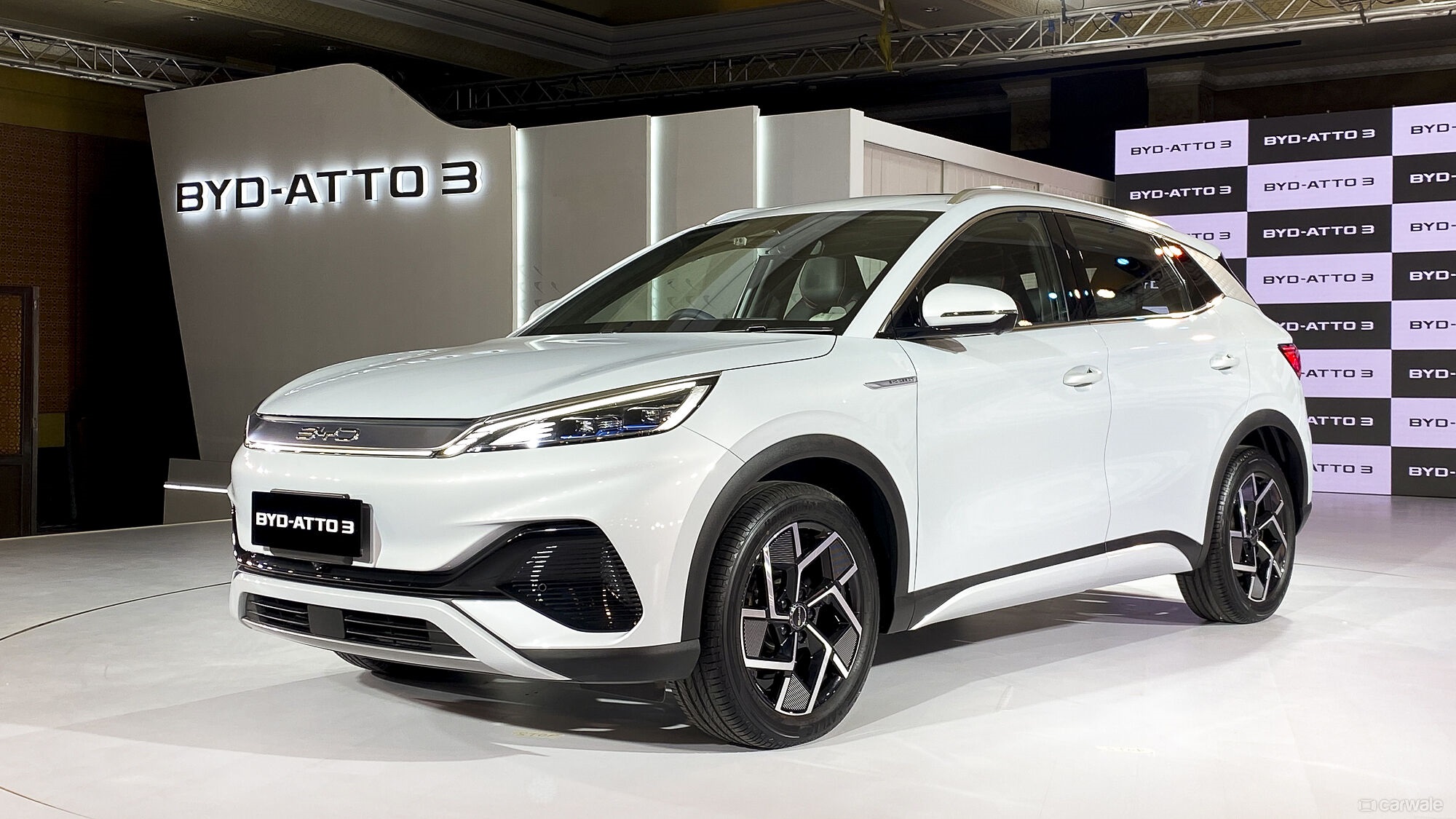
The exterior is neatly executed but no-one's going to be swooning. It talks familiar languages. The full-width front and rear lighting, blanked-out grille and metallic rear side panels say 'EV'. The tall proportions, roof rails, and lower cladding speak 'crossover'. Inside though, things get a lot bolder. It's brightly coloured and the shapes are swoopy. Details lie somewhere between playful and cheesy. Your kids will love it, and if that stops them getting sick or complaining they're not there yet, it's worth it. The cabin is also decently roomy for the size of car. Looking at the inside in detail, it's pretty jazzy in here. In surprising contrast to the cautious exterior design, imaginations have run riot in the cabin. The dash itself is an exaggerated wave-form, and covered in two-time stitched soft plastic. The seats too are multicoloured, with red stitching. The door speakers protrude, and tensed off them are three red strings that form the top of the door bins. So it looks like a guitar. The speaker peripheries are lit, too. Pity they sound mushy. Elsewhere the theme is supposed to be a gym. The doorhandles and gear selector resemble dumbbells, and the vents the weights you hang off them.
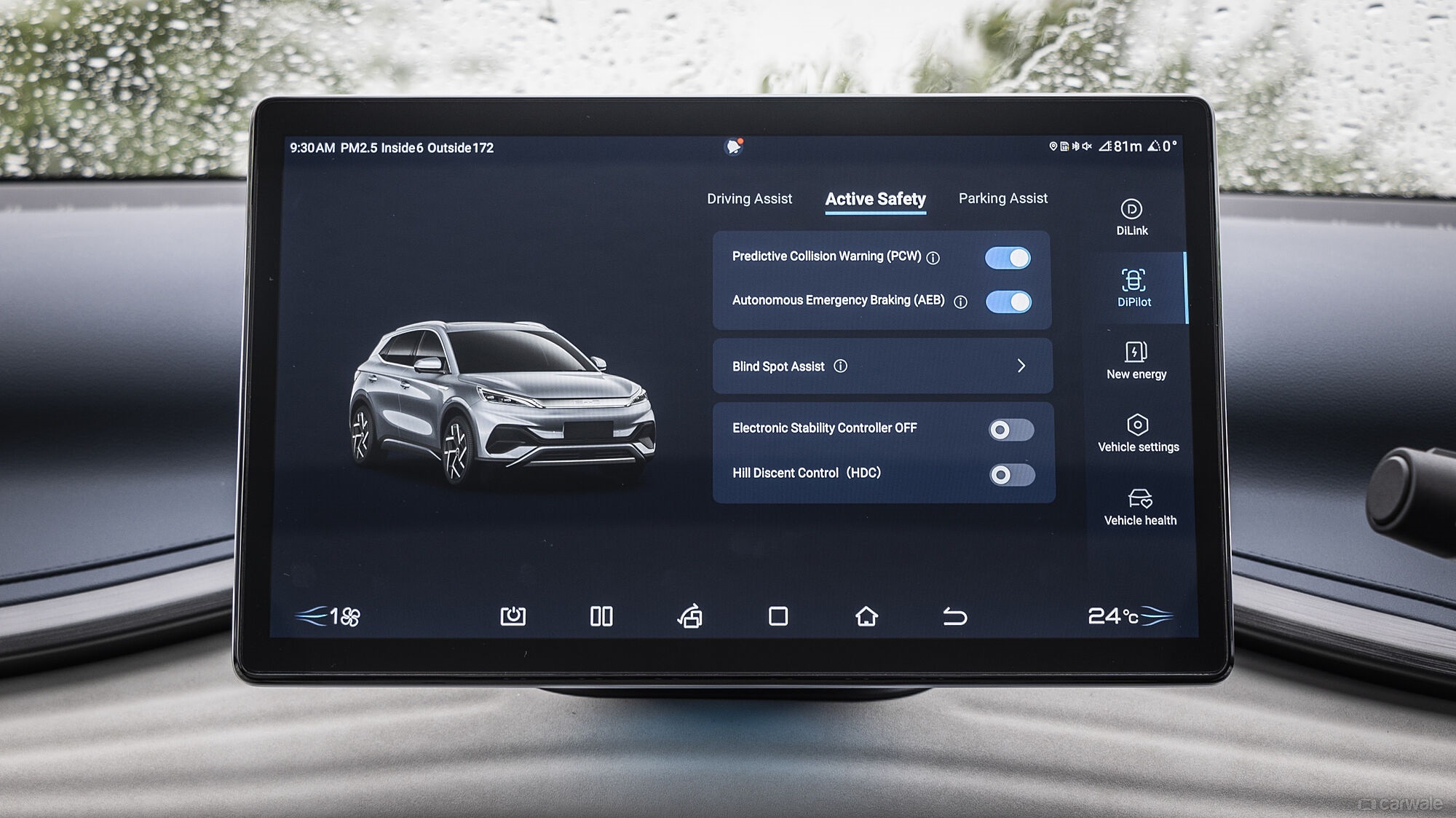
For actually sitting in, the seats are well-contoured for side support, but don't have lumbar adjustment so some people find them hollow on the spine. You're set fairly high, with a low glass waistline, so it feels airy and easy to see out of. The main centre screen does a lot of configuration donkey-work, but the climate, nav and vehicle settings are easily fathomed. The selection of hardware switches is a bit eccentric: there's one to rotate the screen and one for blind-spot warning, but not for lane departure or heated rear screen. Another screen issue is that despite its size, it won't simultaneously display a map and the music you're playing, unless that happens to be Spotify (and you need your own account for that – the car doesn't come with one). Neither will the little driver's screen show navigation arrows.
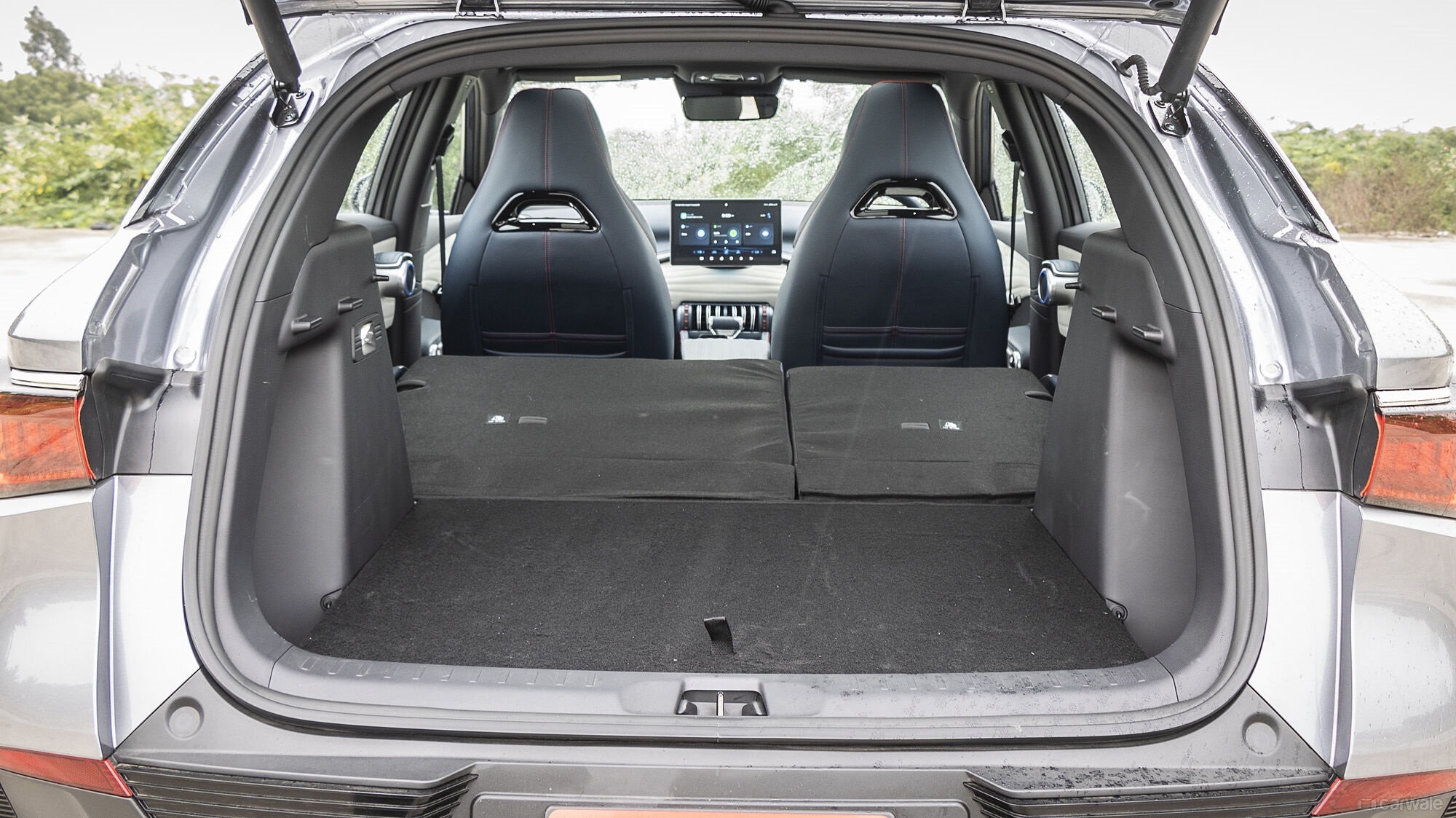
The screen physically rotates between landscape and portrait under electric power. Very whizz-bang. Portrait looks a bit odd, but if you're the type who has their maps set to heading-up or 3D it's helpful. All right-thinking people use north-up of course. The driver's screen is a bit small, crowded and hard-to-read, and there's no HUD option. Rear room is pretty good, especially foot-space under the front seats, which is often an issue in EVs. Reading lights, vents and USB ports are all standard back there. The boot isn't that great, as it's both shallow and not that long front-to-back. It does have a bit of extra beneath the floor, keeping your cables tidy.
the drive
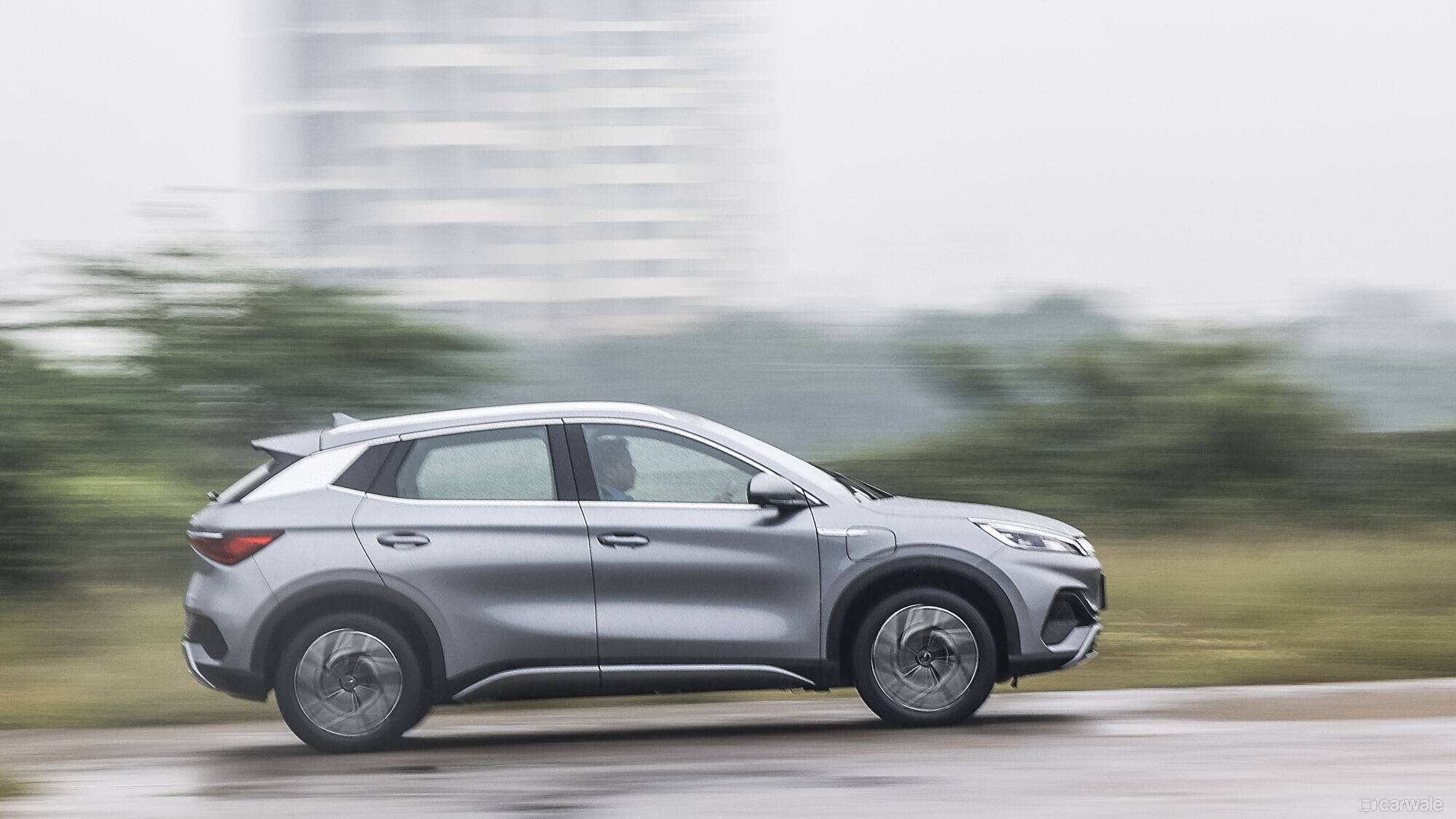
Acceleration is smooth, steering well-calibrated, ride generally supple. It avoids the gallumphingly heavy feel of an ID.4. The Atto 3 is an easy car to get along with, if a trickier one to engage with. So far, so family EV crossover. It isn't perfect. The brakes are soggy. The ride pogoes a bit as it wants for damping. The HMI has a few annoying aspects, including what must be the world's smallest speedo. But overall it's solidly competitive. It launches smoothly, without any self-conscious electric jolt. After that, acceleration is useful up to motorway speeds, so main-road overtaking isn't an issue. Power is just over 200bhp, weight 1,750kg, so it's merely sufficiently brisk rather than quick: 0-100kmph in 7.3 seconds.
Slowing down is less intuitive. The brake pedal is ineffective at the top, and soggy all the way down. Not saying it won't stop you, just that you don't feel entirely in control of the rate. A button on the console switches between two degrees of regeneration. Both are more mild than in rivals, and the less-mild of the two has an oddly delayed action that's at odds with the quick and progressive response of acceleration. The steering is much better calibrated. It's sensibly geared and well-weighted. It also self-centres intuitively, which makes for good directional stability on motorways. It suffers mildly from torque-steer, and on greasy roads the inside tyre easily loses traction coming out of a bend.
The Atto 3 feels pretty light for a car in this class: it's not too reluctant to turn, and body heave and pitch are well controlled. Those are benefits of a 1,750kg kerb weight, which is less than many. In general the ride is pretty supple too, especially on bigger bumps. A bit of secondary harshness shows up on smaller road creases, and a bit of medium-frequency vertical bounce at speed, but nothing to get exercised about. All versions get a full driver-assist suite including 360-degree parking cameras. Yeah the battery isn't that big nor the range, 420 kms, on-paper impressive. But a standard heat pump means it should perform robustly all year round. For overnight charging, it'll accept 7kW AC. The top versions have a three-phase on-board charger, but it isn't much advantage as it's only 11kW. So it cuts full charge time only from nine and a half to six and a half hours. On DC charging, the claim is that the blade battery can maintain its peak-charging power of 88kW right up to 80 per cent. Unfortunately some rivals can draw more power, if only up to about 40 per cent. Anyway the Atto 3 can do 20-80 per cent in just over 35 minutes, which is average but no better.
high-tech…
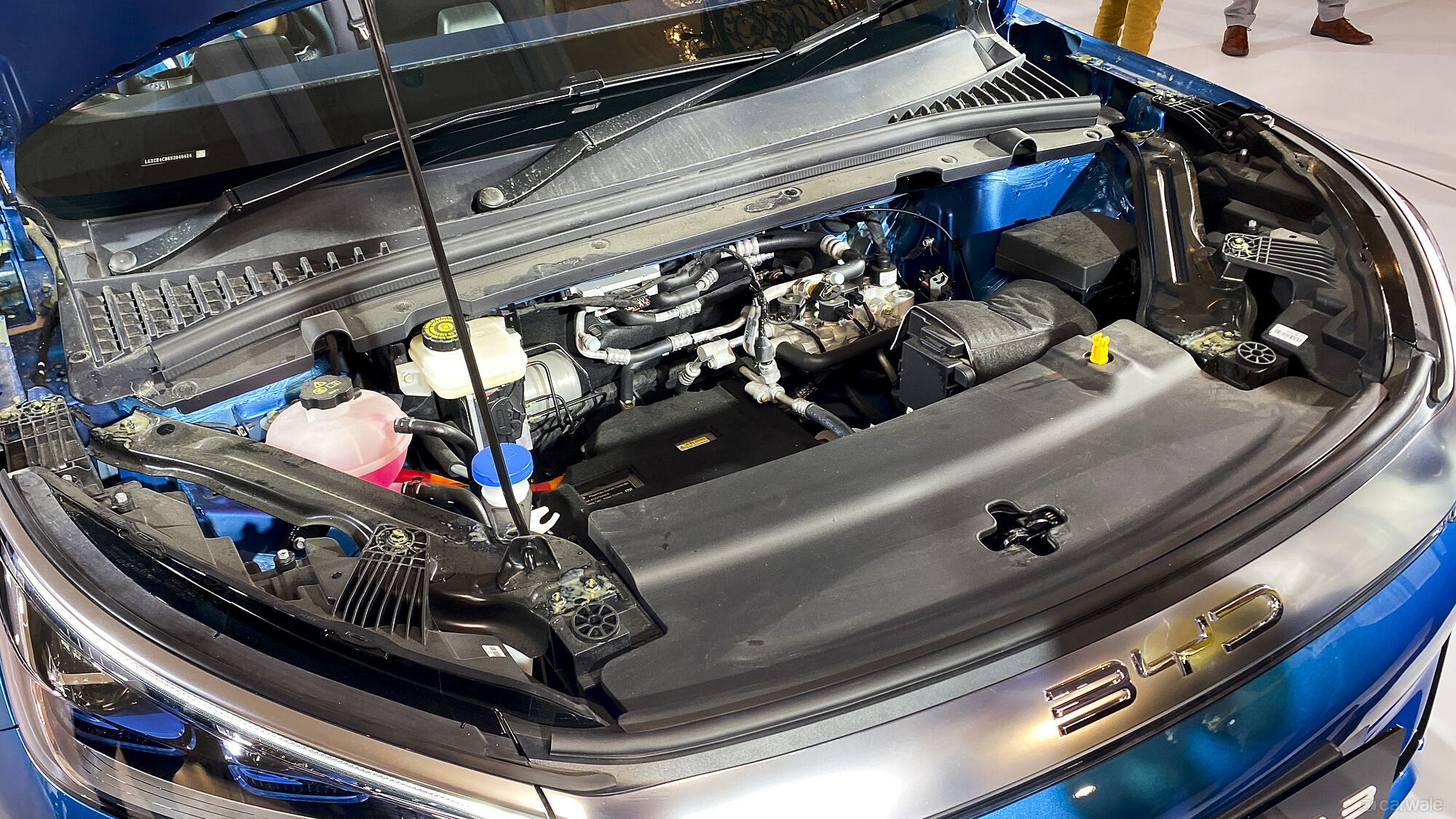
BYD's latest cars, including the Atto3, use a cell-to-pack battery, which the rest of the car business has been talking about for years but not yet doing. Standard electric-car batteries bind their cells into modules, and their modules into the pack. Cell-to-pack puts the cells directly into the main case rather than into intermediate modules. BYD is calling it a 'blade battery'. It means 50 per cent more of the overall pack size consists of the meaningful bit, the cells that drive you along. This means the Atto 3 can get away with a less energy-dense chemistry. Its cells have electrodes of lithium, iron and phosphate (LFP). Most rivals need more energy-dense lithium manganese cobalt (LMC) electrodes. LFP are cheaper, more durable, and less fragile in high-temperature rapid charging. And they don't use cobalt, an element that has been too often got from war zones. There's another significant first here. The Atto 3's motor, power electronics, charger, AC-DC inverter, DC-DC converter, and battery management system are all packaged into one unit. This saves weight and wiring, and improves efficiency.
the verdict
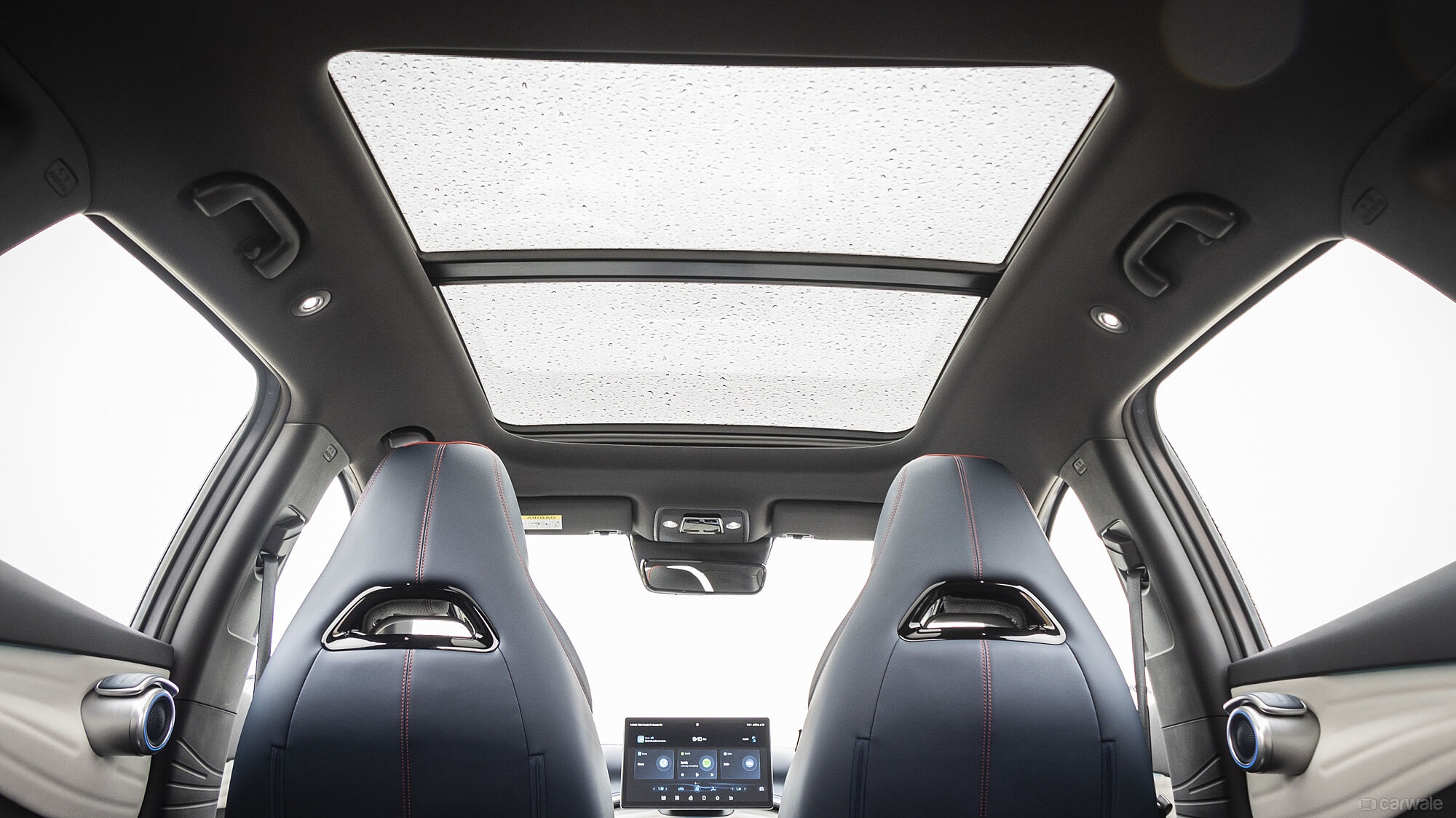
Broadly, we're impressed. The outside is boring, but kids will love the cabin. The screen systems, glass roof, 360-degree cameras, and rotating screen will wow the neighbours. The battery capacity and max range (just 420 kms) throw up questions, but actually for most people this is a sweet spot as it reduces cost and weight versus a longer-range pack. What family drives for more than three hours non-stop? And at that point they'll be able to top up because rapid-charge infrastructure is improving by the day. A battery bigger than that would be a waste of money and weight for them. More of a pinch-point for family holidays is the smallish boot. It drives decently under most circumstances, and, depressing though it is to say, in this class 'decent' is as good as it gets.
Gallery